
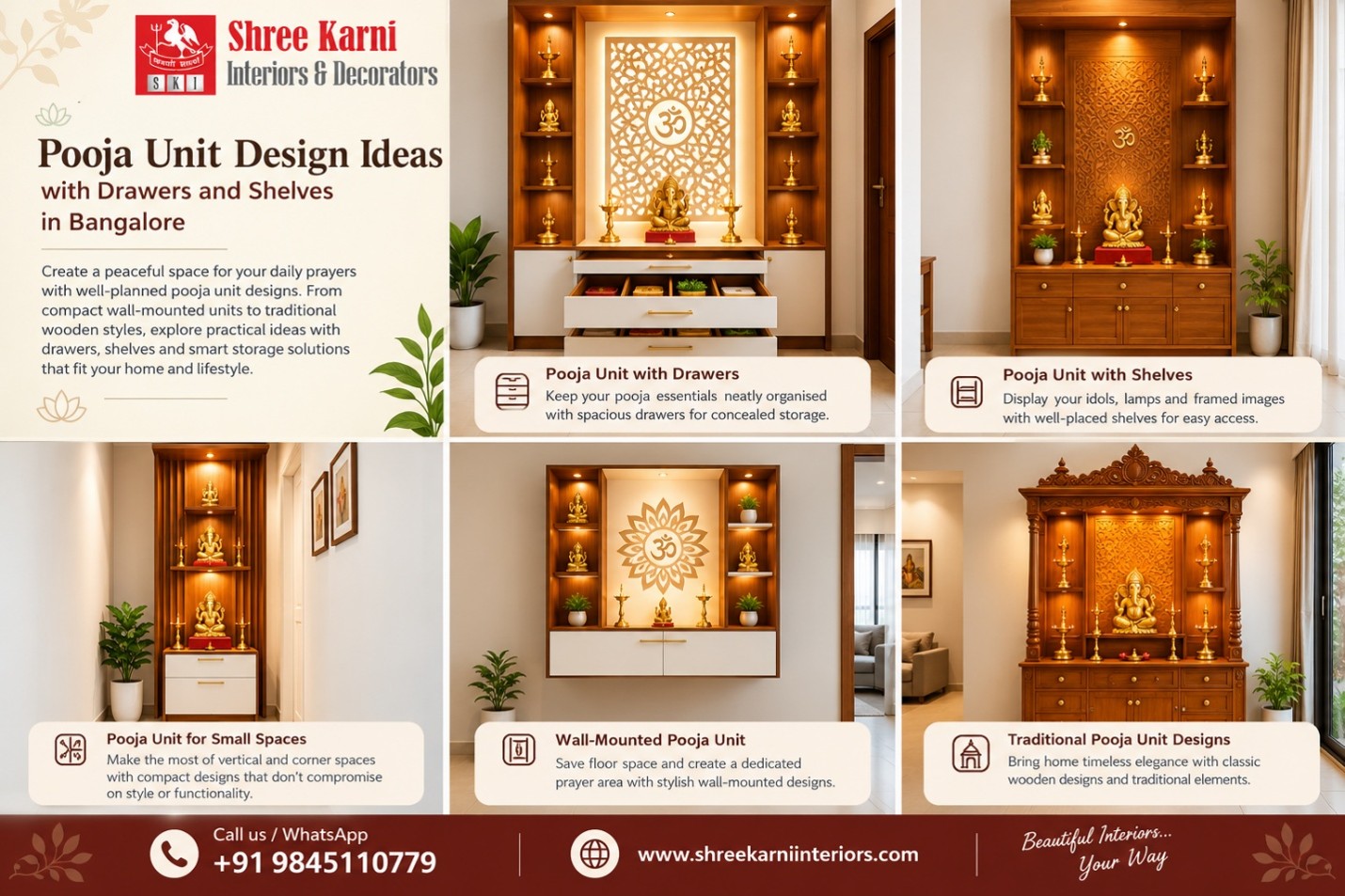
A well-designed pooja unit creates a peaceful space for daily prayers while keeping essential items organised and accessible. Whether you live in an apartment or an independent house, choosing the right layout helps you make effective use of the available space. From compact wall-mounted units to traditional wooden designs, there are several options to consider based on your home’s layout, storage needs and interior style. Explore the interior design services offered by Shree Karni Interiors and Decorators.
When exploring Pooja Unit Design Ideas in Bangalore, consider practical features such as drawers for storing prayer accessories, shelves for placing idols and lamps, and finishes that complement your interiors. Combining these elements thoughtfully can create a functional prayer area without making the surrounding room feel crowded.
Planning a pooja unit for your home? Enquire Now to discuss your design requirements.
Pooja Unit with Drawers for Organised Storage
Drawers provide concealed storage for everyday prayer essentials and help keep the pooja area tidy. They are particularly useful for storing small items that you want to access easily without displaying them on open shelves.
Store Daily Pooja Essentials
A pooja unit with drawers can accommodate incense sticks, camphor, cotton wicks, matchboxes, prayer books and other small accessories. Keeping these items in designated compartments makes them easier to find during daily rituals. Drawer organisers can further separate different items and prevent clutter.
Choose a Suitable Drawer Configuration
The number and size of drawers should reflect your storage requirements and the dimensions of the unit. A compact design may need only one or two drawers, while a larger structure can accommodate additional compartments. Check that the drawers open smoothly without obstructing nearby furniture or walkways.
Pooja Unit with Shelves for Display and Accessibility
Shelves provide convenient spaces for placing idols, framed religious images, lamps and selected decorative items. Their arrangement influences both the appearance and functionality of the prayer area.
Plan Shelf Placement Carefully
Arrange the shelves according to the size and number of items you intend to display. Leave enough vertical clearance between levels so that objects fit comfortably and remain easy to access. The depth of each shelf should suit its intended purpose without projecting unnecessarily into the room.
Combine Open Shelves with Closed Storage
Combining open shelves with drawers or cabinets creates a practical balance between display and storage. Open sections keep frequently used items accessible, while enclosed compartments conceal accessories that you do not need to display. This arrangement helps maintain a neat appearance while making everyday prayer routines more convenient.
Pooja Unit Designs for Small Spaces
In apartments and compact homes, the prayer area may need to fit into a corner, a wall recess or a small section of the living room. A carefully planned layout can establish a dedicated place for prayer while preserving valuable floor space.
Make Effective Use of Vertical Space
A tall, narrow structure can provide multiple storage levels without occupying a large floor area. Shelves above the main prayer platform can hold selected items, while drawers below offer concealed storage. Keep the proportions appropriate for the room and ensure that the platform remains comfortable to use.
Consider Corner and Compact Layouts
A corner pooja unit can make use of an otherwise underutilised area. For a narrow wall section, choose a simple arrangement with enough room for the intended idols and prayer accessories. Avoid oversized compartments and excessive decoration that could make the surrounding area feel cramped.
Wall-Mounted Pooja Unit Designs
Wall-mounted pooja unit designs are useful when floor space is limited or when you want to create a dedicated prayer area within a larger room. They can work well in smaller living rooms and homes without a separate prayer room.
Choose a Practical Wall Layout
Measure the available wall width and height before finalising the design. Consider nearby doors, windows, electrical points and furniture when deciding where to position the unit. The layout should provide comfortable access to the prayer platform without interfering with movement around the room.
Plan Shelves, Drawers and Wall Support
A wall-mounted structure can include floating shelves, a compact prayer platform or a combination of open and closed storage. If drawers are included, allow sufficient clearance for them to open fully.
Proper wall support and suitable fixing methods are essential for safe installation. Choose fittings appropriate for the wall type and the total weight of the unit and its contents. Professional installation may be advisable for heavier structures.
Planning a compact or wall-mounted pooja unit? Enquire Now to discuss your design requirements
Wooden Pooja Unit Designs for Warm Interiors
Wooden pooja unit designs can add warmth and a natural appearance to a prayer area. Depending on the finish and decorative details, they can complement contemporary interiors as well as homes with traditional decor.
Select a Finish That Complements Your Home
Light wood finishes can complement neutral walls and simple interiors, while darker tones may suit traditional furniture and richer color palettes. Choose a finish that coordinates with nearby furniture, flooring and other wooden elements.
The overall appearance should blend with the room rather than look visually disconnected from the rest of the interior.
Consider Maintenance and Material Suitability
Dust, smoke and oil residue may accumulate around a frequently used prayer area. Select surfaces that are easy to clean and maintain. If the unit will be near lamps or other heat sources, consider the material’s suitability and maintain a safe distance between combustible surfaces and open flames.
Traditional Pooja Unit Designs for a Classic Look
Traditional pooja unit designs often feature decorative borders, arch-inspired frames, ornamental panels, symmetrical arrangements and rich wood tones. These elements can give the prayer area a distinctive appearance that reflects your preferred interior style.
Incorporate Traditional Design Elements
Decorative frames and carefully arranged shelves can create a classic look. Select details that suit the available area and the size of the prayer platform. In compact homes, restrained ornamentation may produce a more balanced appearance than an elaborate structure.
Combine Traditional Styling with Modern Storage
Traditional styling can be combined with practical features such as concealed drawers, accessible shelves and easy-to-clean surfaces. This approach preserves a classic appearance while meeting everyday storage needs.
Choose decorative details and proportions that complement the surrounding room, particularly when the pooja unit is located in a living room or another shared space.
How to Choose the Right Pooja Unit Design in Bangalore
Selecting a pooja unit involves more than choosing an attractive style. The structure should fit the available area, accommodate your prayer essentials and remain convenient for everyday use.
Measure the Available Space
Measure the width, height and depth available before finalising the layout. Check the clearance needed for drawers, cabinet doors and projecting shelves. Accurate measurements help prevent installation difficulties and ensure that the finished unit fits comfortably within the room.
Identify Your Storage Requirements
List the items you regularly use during prayers. Decide which objects should remain visible and which are better stored inside drawers or cabinets. This will help you determine the right balance between open shelving and enclosed compartments.
Match the Design to Your Interior Style
Consider whether a minimalist, contemporary, wooden or traditional design will complement your home. Coordinating the finish with nearby furniture and maintaining balanced proportions can help the prayer area blend naturally into the interior.
Plan Lighting and Electrical Points
If you want to include lighting, plan the electrical points before installation. Ensure that the wiring is arranged safely and does not interfere with shelves or storage compartments. Keep electrical fixtures and combustible materials away from lamps and other heat sources.
Check Materials and Installation Requirements
Ask about the materials, surface finish, shelf strength and installation method before making a decision. The structure should be stable and capable of supporting the intended load. Wall-mounted units require appropriate fixings and adequate support for the specific wall type.
Conclusion
The right Pooja Unit Design Ideas in Bangalore can help you create a prayer area that suits your home’s layout, storage requirements and personal style. From drawer-equipped units and open shelving to compact layouts, wooden finishes and traditional detailing, each option offers different practical and aesthetic benefits.
Start by measuring the available area, listing the items you need to store and choosing a finish that complements your interiors. With thoughtful planning, you can create an organised and welcoming space for daily prayers while making effective use of your home.
Looking for a pooja unit design that complements your home? Enquire Now to discuss your requirements.