
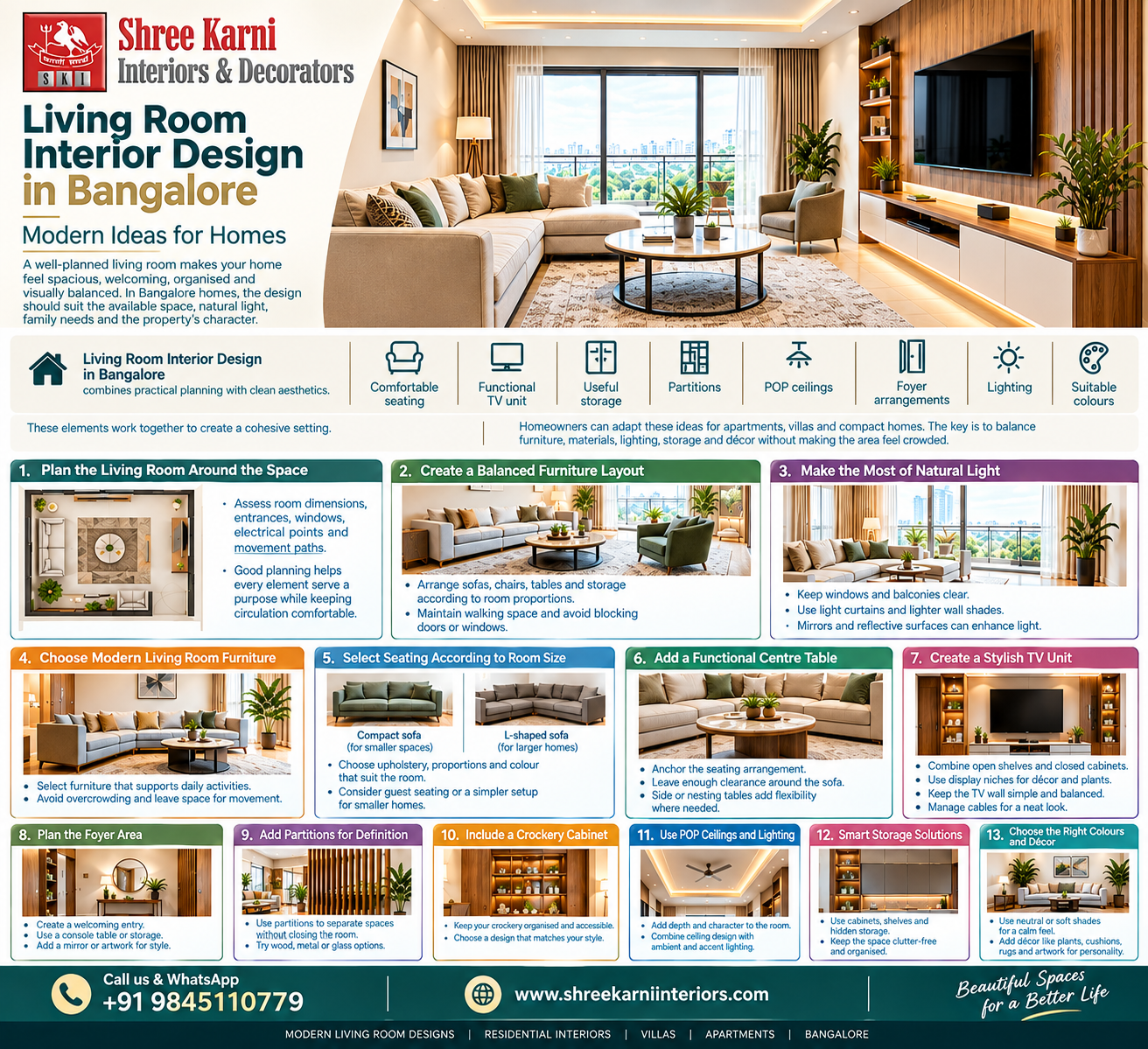
The living room is one of the first spaces guests experience when they visit a home. A well-planned interior can make it feel spacious, welcoming, organised, and visually balanced. In Bangalore homes, the layout should suit the available floor area, natural light, family requirements, and overall character of the property.
Living Room Interior Design in Bangalore combines practical planning with clean aesthetics. Comfortable seating, a functional TV unit, useful storage, partitions, POP ceilings, foyer arrangements, lighting, and suitable colors can work together to create a cohesive setting.
Homeowners exploring Living Room Design Ideas for Bangalore can adapt these elements to suit apartments, villas, and compact homes. The key is to balance furniture, materials, lighting, storage, and décor without making the area feel crowded.
Transform Your Living Room — Enquire Now
Plan the Living Room Around the Available Space
Before selecting furniture or decorative features, assess the room’s dimensions, entrances, windows, electrical points, and movement paths. Good planning helps every element serve a purpose while keeping circulation comfortable.
Create a Balanced Furniture Layout
Arrange sofas, chairs, tables, and storage according to the room’s proportions. Maintain enough walking space between major pieces and avoid blocking doors, windows, or passageways.
Compact apartments can benefit from streamlined seating and multifunctional furniture, while larger homes may accommodate an L-shaped sofa, accent chairs, a centre table, and additional storage.
Make the Most of Natural Light
Bangalore homes with balconies or large windows can benefit from good natural light. Keep these openings clear and choose curtains that complement the interior without making the area appear heavy.
Lighter wall shades, reflective surfaces, and strategically placed mirrors can help distribute available light and create a brighter atmosphere.
Choose Modern Living Room Furniture
Furniture strongly influences both comfort and visual character. These Living Room Furniture Ideas can help create a practical arrangement that suits the dimensions and everyday requirements of the home.
Rather than filling the room with numerous pieces, select furniture that supports daily activities while leaving sufficient room for movement.
Select Seating According to Room Size
A compact sofa can work well in a smaller apartment, while larger properties can accommodate an L-shaped sofa or a combination of seating options. Upholstery, proportions, and color should complement the surrounding finishes.
Consider how the seating will be used. Homes that regularly host guests may need additional chairs, while smaller households may prefer a simpler arrangement with more open floor area.
Add a Functional Centre Table
A centre table can anchor the seating arrangement while providing a convenient surface for everyday use. Choose a size that leaves comfortable clearance around the sofa.
Side tables and nesting tables can add flexibility where space permits. Their materials and finishes can introduce subtle contrast to the overall palette.
Create a Stylish TV Unit
The TV unit can act as a focal feature while providing valuable storage. It can combine open shelves, closed cabinets, display niches, and concealed sections.
Combine Display and Storage
Open shelving can showcase books, artwork, plants, or accessories, while closed cabinets can keep everyday belongings organised. Combining both creates useful storage without making the wall appear cluttered.
Cable management should also be considered during installation. Concealed wiring helps maintain a neat television wall.
Keep the TV Wall Visually Balanced
Avoid adding too many decorative features around the television. A simple backdrop, textured finish, wood detailing, or subtle lighting can create interest without overwhelming the wall.
The TV unit should complement the seating, flooring, walls, and other finishes so that the entire interior feels connected.
Add a Crockery Cabinet for Practical Storage
A crockery cabinet can provide dedicated space for dining accessories, serving pieces, and decorative items. Its placement should relate naturally to the living and dining zones, especially in open-plan apartments and villas.
Combine Open and Closed Storage
Glass-front sections can display crockery, while closed compartments can hold items that are used less frequently. This combination provides practical organisation while maintaining a clean appearance.
For compact homes, a vertically arranged cabinet can make better use of wall space without occupying much floor area.
Use Partitions to Define Open Spaces
Many Bangalore apartments feature open-plan living and dining areas. A partition can create visual separation without completely closing the space.
Consider Light and Airflow
Slatted wood screens, decorative panels, glass elements, and open shelving can separate zones while retaining a sense of openness. The divider should allow comfortable movement and preserve airflow.
A partially open partition can establish distinct areas for entertaining, dining, or relaxing while maintaining continuity between connected spaces.
Explore POP Ceiling Designs
A POP ceiling can add architectural character while helping define different areas within the living room. Simple geometric forms often suit modern interiors better than highly elaborate patterns.
Integrate Lighting Into the Ceiling
Recessed lights, cove lighting, and pendant fixtures can enhance the ceiling while supporting different activities. The lighting arrangement should complement the furniture layout and proportions.
In compact homes, simpler ceiling details can prevent the interior from feeling visually busy.
Design an Inviting Foyer Area
When the entrance opens directly into the living room, a small foyer arrangement can create a clear transition between the entry and seating area.
Keep the Entrance Practical
A console table, mirror, compact storage unit, or decorative panel can establish a defined entry point. Avoid excessive furniture in narrow foyers because it can restrict movement.
In larger homes, a feature wall or statement console can create a stronger visual connection between the entrance and the main interior.
Use Color to Shape the Living Room
Color influences how large, bright, and cohesive a living room feels. Neutral shades can establish a calm foundation, while accent tones can introduce personality.
Combine Base and Accent Shades
Use one dominant palette and introduce complementary colors through cushions, artwork, rugs, curtains, or furniture. This approach also makes future updates easier without requiring major changes.
Natural wood tones, muted colors, and textured surfaces can work particularly well with modern and contemporary interiors.
Add Storage Without Overcrowding the Room
Storage should support everyday living while maintaining a clean appearance. Built-in cabinets, TV storage, display shelves, and concealed compartments can make effective use of available wall space.
Prioritise Concealed Storage
Closed cabinets are useful for belongings that need to remain out of sight. Keeping frequently used items organised reduces visible clutter.
Where floor area is limited, vertical storage can provide additional capacity without occupying a large footprint.
Create a Modern Living Space — Get in Touch
Add Decor That Complements the Space
Décor can give a living room personality without compromising its functionality. Choose pieces that work with the existing furniture, colors, materials, and finishes.
Use Accessories Selectively
Rugs can define the seating area, while cushions and curtains can introduce color and texture. Artwork, indoor plants, mirrors, and decorative objects can add character to simple interiors.
Avoid filling every shelf, wall, or table with accessories. Leaving some areas open helps maintain a clean and relaxed atmosphere.
Explore Contemporary Living Room Designs
Contemporary Living Room Designs focus on clean forms, practical layouts, balanced colors, and materials that create a refined yet comfortable environment.
Homeowners looking for Modern Living Room Designs in Bangalore can adapt contemporary elements to suit their property’s size and architectural style. A neutral sofa can be paired with warm wood finishes, textured walls, modern lighting, and artwork to introduce character without excessive ornamentation.
The space does not need to follow an overly minimal style. Practical furnishings, natural textures, soft colors, and carefully chosen accents can create a welcoming contemporary setting.
Modern Living Room Ideas for Different Bangalore Homes
Every property has different requirements, so the approach should reflect its floor area, architectural layout, and lifestyle. These Modern Living Room Ideas can be adapted to apartments, villas, and compact homes.
Apartment Living Rooms
Apartments often benefit from compact furniture, vertical storage, multifunctional units, and lighter finishes. Keeping the floor visually open can make a smaller area feel more spacious.
Wall-mounted furniture can also reduce visual bulk, particularly in compact Bangalore apartments.
Plan Your Dream Living Room — Contact Us
Villa Living Rooms
Villas generally provide more room for larger seating arrangements, statement furniture, feature walls, display units, and defined foyer spaces.
Furniture proportions become especially important in larger areas. A combination of seating, accent lighting, artwork, and storage can establish balance without making the interior appear empty.
Compact Living Areas
For smaller homes, prioritise essential furniture and combine functions wherever possible. Wall-mounted TV units, streamlined seating, vertical storage, and carefully selected décor can maximise usable space.
Avoid filling every available wall or corner. Leaving some areas open can make the interior feel larger and more relaxed.
Bring the Living Room Elements Together
A successful living room comes from connecting its individual elements rather than treating each feature separately. Furniture, colours, materials, lighting, storage, and décor should complement one another in proportion and visual character.
The layout should reflect how the household uses the room. Seating should support conversation and relaxation, storage should accommodate everyday belongings, and decorative features should add personality without interfering with movement.
Whether the property is an apartment, villa, or compact home, maintaining a clear relationship between these elements can create an organised and comfortable setting.