
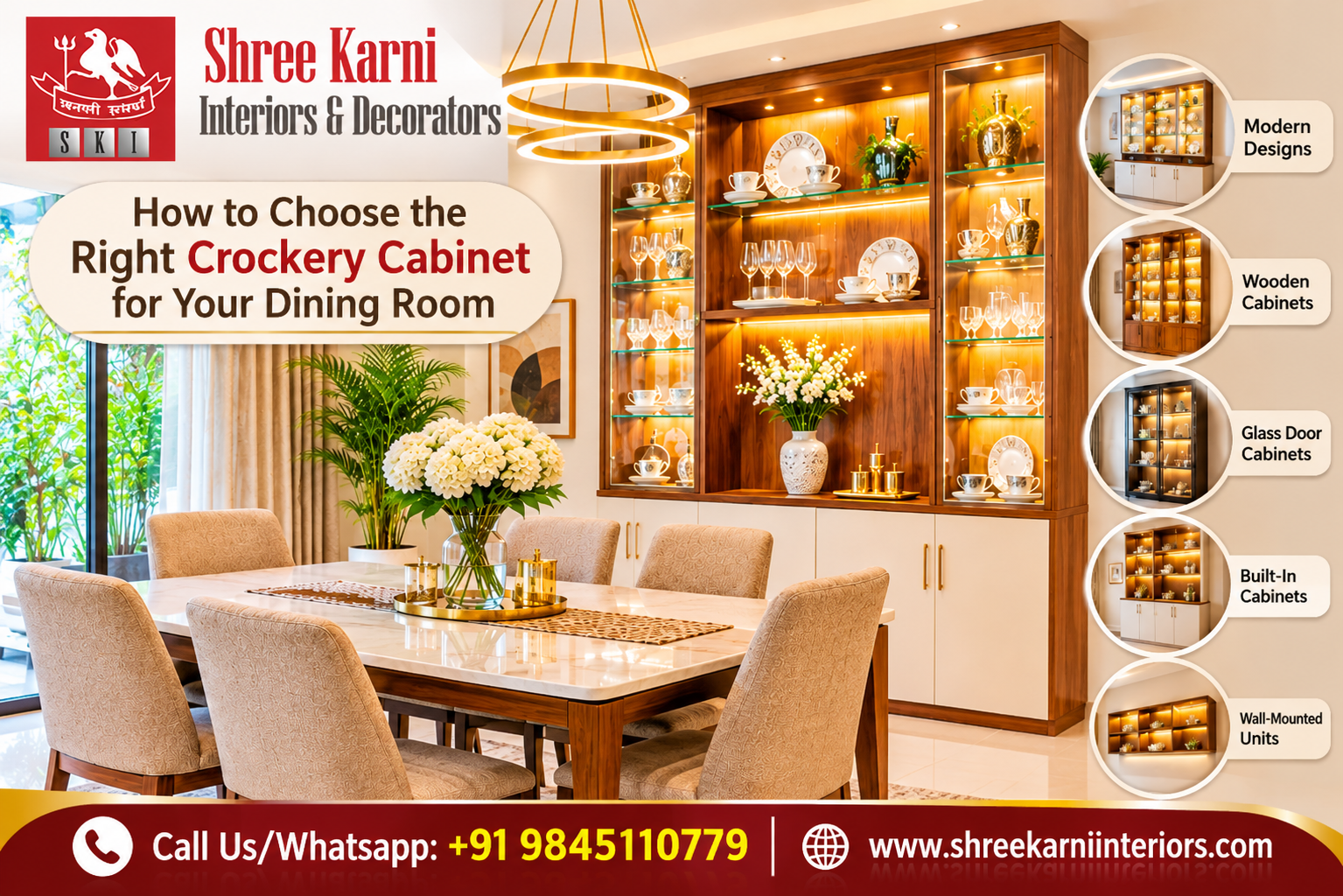
A crockery cabinet provides dedicated storage for plates, bowls, cups, glasses, and serving dishes. It also creates space to display decorative items while keeping dining essentials organised and accessible.
Choosing the right cabinet involves more than selecting an attractive design. Its dimensions, material, storage arrangement, and finish should suit your dining room layout and household requirements. A well-planned unit can improve organisation without restricting movement or making the room feel crowded.
If you are planning a Crockery Cabinet for Dining Room in Bangalore, consider the available space, storage needs, preferred design, and existing furniture before making a selection. This guide explains the different cabinet styles, materials, and practical features to help you choose a suitable option for your home.
Explore custom crockery cabinet designs to suit your dining space and storage needs. Enquire Now with Shree Karni Interiors.
1. Measure Your Dining Room Before Choosing a Cabinet
Start by measuring the area where you intend to install the cabinet. Its dimensions should accommodate your crockery collection while leaving enough room for comfortable movement.
Consider the following factors before finalising the layout:
- Available wall space: Measure the width and height of the installation area. Check for windows, doors, electrical switches, and other obstructions.
- Cabinet depth: Choose a depth that accommodates plates, bowls, and serving dishes without extending too far into the dining area.
- Movement clearance: Leave enough space for dining chairs, walkways, drawers, and cabinet shutters to open comfortably.
- Furniture placement: Check that the cabinet does not interfere with the dining table or nearby furniture.
- Accessibility: Position frequently used items at convenient heights so family members can reach them easily.
A narrow vertical cabinet may suit a compact dining area, while a larger room can accommodate a wider unit with separate storage and display sections.
Accurate measurements help determine suitable cabinet dimensions and prevent installation difficulties later.
2. Explore Different Crockery Cabinet Designs
Once you understand the available space, compare different designs based on your interior style and storage requirements. Each configuration offers a different way to organise and display dining essentials.
Modern Crockery Cabinet Designs
Modern crockery cabinet designs feature clean lines, simple profiles, and practical storage arrangements. They often combine open shelves, drawers, and concealed cupboards within a single unit.
Common design features include:
- Minimal detailing and streamlined cabinet profiles.
- Neutral shades and coordinated color combinations.
- Contemporary handles or handleless shutters.
- Open shelves for decorative accessories.
- Closed compartments for everyday dinnerware.
You can also combine contrasting finishes or introduce glass sections to create visual interest. Select a design that complements your dining table, wall finishes, and surrounding furniture.
Wooden Crockery Cabinets
Wooden crockery cabinets add natural textures and warmth to dining interiors. Their appearance varies according to the wood type, grain pattern, color, and surface treatment.
Light wood finishes can complement contemporary interiors, while darker shades may suit traditional or formal dining spaces. When selecting a wooden cabinet, check its construction quality, material specifications, surface finish, and maintenance requirements. The chosen finish should also coordinate with your existing furniture.
Glass Door Crockery Cabinets
Glass door crockery cabinets provide a dedicated display area for dinnerware, glassware, and decorative collections. Clear glass keeps the contents visible, while frosted or tinted glass offers a more subtle appearance.
Available configurations include framed glass shutters, glass-fronted shelves, and combinations of transparent and closed compartments. If you prefer illuminated display sections, plan the lighting placement and electrical connections during the design stage. Select suitable glass specifications according to the cabinet dimensions and intended application.
Built-In Crockery Cabinets
Built-in crockery cabinets are planned according to the dimensions and layout of a particular room. They make use of available wall space while providing storage tailored to household requirements.
Depending on the dining area, a built-in unit can extend from floor to ceiling or occupy a selected section of the wall.
Consider the cabinet height, depth, shelf arrangement, and shutter movement before installation. Its design should also coordinate with existing furniture and other interior elements.
Wall-Mounted Crockery Units
Wall-mounted crockery units are fixed to the wall rather than placed directly on the floor. They keep the floor area clear and can create a lighter appearance in compact dining spaces.
Before choosing this arrangement, assess the wall structure, fixing method, cabinet weight, and expected storage load. Secure installation is particularly important when storing heavier dinnerware.
Position the unit at a comfortable height so family members can access its contents without difficulty.
3.Understand Different Crockery Cabinet Materials
The material influences a cabinet’s appearance, construction, finish, and maintenance requirements. When comparing crockery cabinet materials, consider the intended application and the location of the unit.
Plywood
Plywood consists of multiple wood veneer layers bonded together. It is commonly used in furniture and cabinetry because of its layered construction.
Its suitability depends on the grade, thickness, manufacturing quality, and surface finish. Check the material specifications and recommended applications before selecting it for your cabinet.
Medium-Density Fibreboard (MDF)
MDF has a smooth and uniform surface that works well for painted finishes and decorative detailing. It is available in different grades, with moisture-resistant variants suited to specific applications.
Its performance depends on the grade, protective coating, and exposure to moisture. Consider the cabinet location and manufacturer’s recommendations before making a selection.
Solid Wood
Solid wood features natural grain patterns that give each cabinet a distinctive appearance. Different wood species offer variations in color, texture, and characteristics.
Its finish, durability, and maintenance requirements depend on the wood type and surface treatment. Compare the construction quality and care instructions before choosing this material.
Glass
Glass is generally used for cabinet shutters, display sections, and decorative details. It allows selected crockery to remain visible and can make a large cabinet appear visually lighter.
Choose an appropriate glass type and thickness based on the cabinet design, dimensions, and intended use.
4. Plan the Internal Storage Arrangement
The internal layout should accommodate the crockery and dining accessories you regularly use. Before finalising the design, identify the items you intend to store and group them according to their size and frequency of use.
The following crockery cabinet storage ideas can help create an organised arrangement.
Separate Sections for Different Items
Allocate dedicated spaces for dinner plates, bowls, cups, glasses, and serving dishes. Grouping similar items makes them easier to locate and return after use.
You can also keep everyday dinnerware separate from special-occasion collections.
Adjustable Shelves
Adjustable shelves allow you to modify the available height according to your crockery collection. They are useful for accommodating tall glasses, large bowls, and serving pieces.
Check the shelf spacing and weight capacity to ensure they can support the intended items.
Drawers for Smaller Accessories
Drawers provide convenient storage for cutlery, napkins, placemats, and other dining accessories.
Internal dividers can separate smaller items and prevent them from becoming mixed together. Choose drawer dimensions according to the accessories you plan to store.
Closed Cupboards for Concealed Storage
Closed cupboards keep stored items out of direct view and help reduce dust exposure. They are suitable for everyday crockery, additional dinnerware, and items that do not need to be displayed.
Select shutter arrangements that open comfortably without obstructing nearby furniture.
Open Shelves for Display
Open shelves provide space for decorative plates, serving pieces, and selected accessories.
Keep the arrangement simple and avoid overcrowding the shelves. Combining open sections with closed cupboards provides both display space and concealed storage.
5. Consider Space-Saving Crockery Cabinet Designs
Compact dining areas require careful furniture placement to maintain comfortable movement. Space-saving crockery cabinets make better use of available wall and corner areas without occupying unnecessary floor space.
Consider these configurations when planning a smaller dining area:
- Vertical cabinets: Use available wall height to provide storage within a narrow floor footprint.
- Corner cabinets: Make use of suitable corners that might otherwise remain unused.
- Compact units: Combine essential shelves and cupboards within a smaller arrangement.
- Multi-functional designs: Bring display shelves, drawers, and concealed storage together in one cabinet.
- Wall-mounted units: Keep the floor area clear while providing additional storage.
For Bangalore homes, choose a configuration that suits the dining area’s dimensions, furniture placement, and daily usage.
Also check the positions of electrical points, switches, windows, and nearby furniture before finalising the installation. The aim is to provide convenient storage while keeping the dining area comfortable and easy to navigate.
Choose a space-saving crockery cabinet for your dining area. Enquire Now to discuss your requirements.
6. Match the Cabinet with Your Dining Room Interior
The cabinet should complement the surrounding interior rather than appear disconnected from the rest of the room. Its color, finish, hardware, and detailing should coordinate with existing furniture.
Color and Surface Finish
Consider the dining table, wall color, flooring, and nearby furniture when selecting a cabinet finish.
Neutral shades create a subtle appearance, while contrasting colors can make the unit a focal point. Choose combinations that complement the overall interior theme.
Handles and Hardware
Handles, hinges, and other fittings influence both appearance and everyday usability.
Select hardware that matches the cabinet design and operates smoothly. Check the quality and suitability of the fittings for regular use.
Lighting and Display
Internal lighting can improve visibility and highlight selected items in glass-fronted sections.
You can consider suitable LED lighting for display compartments. Plan its placement, wiring, and electrical connections during the design stage.
Coordination with Existing Furniture
Consider the shapes, colors, and finishes used throughout the dining area. Coordinating these details creates a balanced interior without requiring every furniture piece to look identical.
7. Check Accessibility, Safety, and Maintenance
A well-planned cabinet should be convenient to use and suitable for the items it holds. Review these practical details before approving the final design:
- Place frequently used crockery on easily accessible shelves.
- Ensure shutters and drawers open without hitting nearby furniture.
- Check that shelf depth accommodates your plates and serving dishes.
- Provide appropriate storage arrangements for heavier items.
- Confirm that wall-mounted units have secure fittings and adequate support.
- Check whether the surfaces, glass panels, and hardware are easy to clean.
Maintenance requirements vary according to the selected material and finish. Use suitable cleaning products and follow the manufacturer’s care instructions.
These checks help keep the cabinet functional, safe, and organised for everyday dining requirements.
8. Plan a Custom Crockery Cabinet for Your Dining Room
A custom-designed cabinet can be planned around your dining room dimensions, storage requirements, and preferred interior style. It allows you to select the arrangement of shelves, drawers, display sections, and cupboards according to your household needs.
Before discussing your project with an interior design team, prepare the following details:
- Measurements of the proposed installation area.
- Types and quantities of crockery you intend to store.
- Preferred cabinet design, color, and finish.
- Requirements for open shelves and concealed storage.
- Details of nearby furniture and existing interior finishes.
Having these details ready makes it easier to communicate your expectations and finalise a suitable design.
Shree Karni Interiors offers crockery cabinet designs to suit different dining spaces, storage requirements, and interior styles. Contact the team to discuss your dining room layout and crockery cabinet requirements.
Conclusion
Choosing the right crockery cabinet requires a balance between available space, storage requirements, material selection, and interior style. Modern, wooden, glass door, built-in, and wall-mounted designs each offer different possibilities for organising dining essentials.
Start by measuring the dining area and identifying the items you need to store. Compare suitable materials, shelf arrangements, and cabinet configurations before finalising the design. Pay attention to accessibility, installation requirements, and maintenance to ensure the unit suits your everyday needs.
With proper planning, you can select a crockery cabinet that complements your dining room while providing convenient and organised storage.
Planning your dining room interiors? Contact Shree Karni Interiors to discuss your requirements.