
A TV cabinet is more than a place to position a television. It can organise media equipment, provide useful storage and give the living room a defined focal point. In Bangalore apartments and independent homes, the television wall often needs to balance storage, viewing comfort and available space without making the room feel crowded.
The right TV unit depends on the television size, wall width, seating position, storage requirements and overall room layout. Electrical points, internet connections, cable routes, windows and nearby furniture should also be considered before installation.
This guide covers practical TV Cabinet Designs in Bangalore and TV Cabinet Design Ideas for Bangalore Homes, including modern layouts, floating units, storage options, materials, placement considerations, dimensions and common mistakes to avoid. For more ideas and solutions for different rooms, explore Shree Karni Interiors and its home interior design services.
Planning a TV cabinet for your Bangalore home?
Why TV Cabinet Design Matters
The television is often one of the main visual elements in a living room. A well-planned unit can frame the screen while creating dedicated space for media devices, remotes, books and decorative items.
A suitable cabinet can also reduce visual clutter by giving everyday equipment a defined place. Its size should relate to the room instead of simply filling the available wall.
Proportion is especially important. A large unit can overwhelm a compact living room, while a very small cabinet may look disconnected from a wide wall. The television wall should also complement the sofa, flooring, wall color and other major furniture.
Before selecting a style, identify what you need from the space. Storage, equipment placement, viewing position and wall dimensions can all influence the final arrangement.
Modern TV Cabinet Design in Bangalore: Ideas to Consider
Modern TV Cabinet Design in Bangalore can vary based on the size, layout and storage needs of each home. A compact apartment may suit a slim unit with essential storage, while a larger living room can accommodate a wider arrangement with display sections and additional compartments.
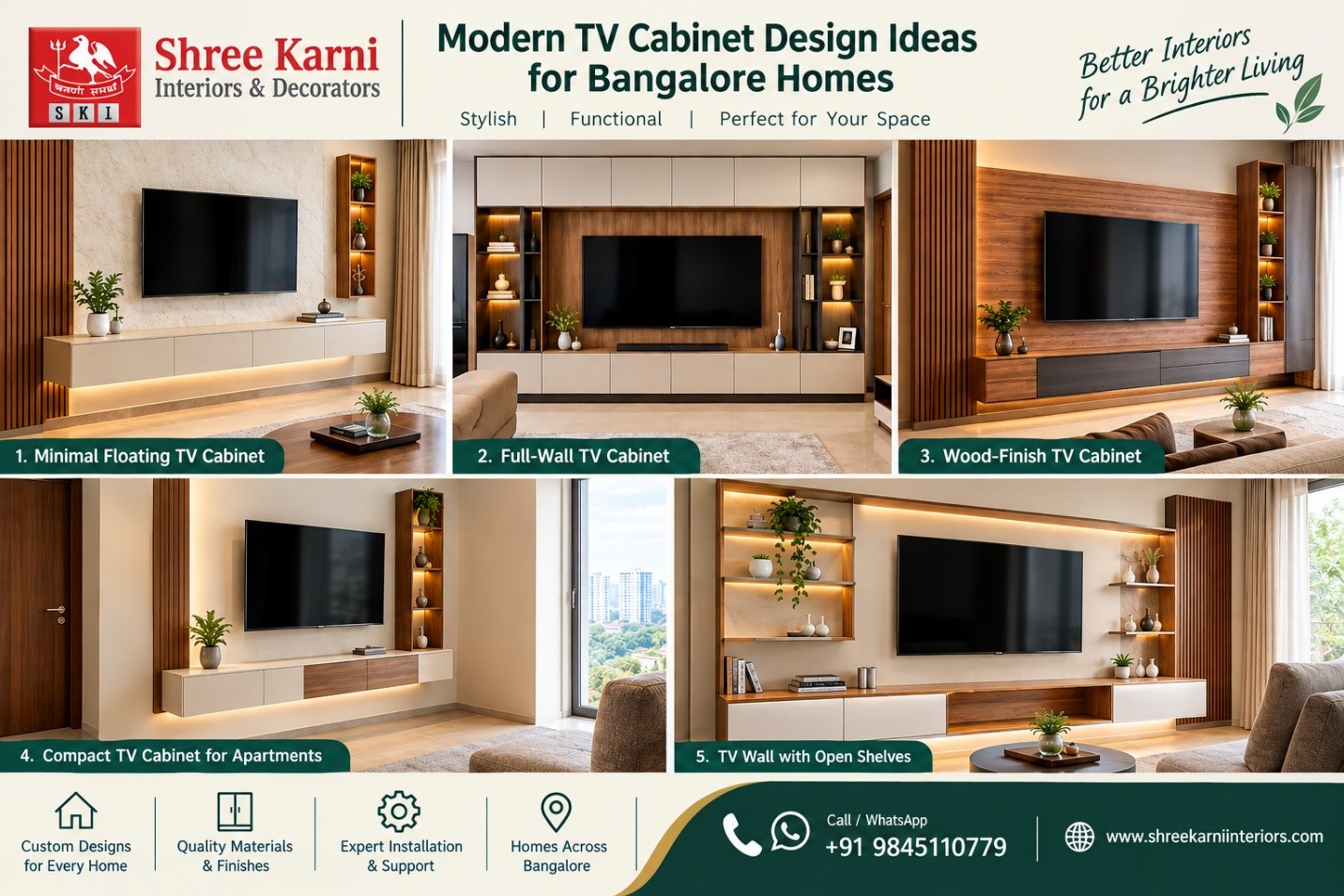
1. Minimal Floating TV Cabinet
A floating TV cabinet is fixed to the wall instead of sitting directly on the floor. The visible floor beneath the unit creates a lighter appearance and can work well in smaller living rooms.
Drawers or closed compartments can store remotes, chargers, gaming accessories and other everyday items. Clean lines and a simple finish can also prevent the television wall from looking visually heavy.
Before installation, check the wall construction and mounting requirements. The fixing system should be suitable for the cabinet and television.
2. Full-Wall TV Cabinet
A full-wall TV unit uses a larger section of the wall to combine television placement, storage and display space.
Closed cabinets can be positioned around the screen, while selected open sections can hold books, photographs or decorative pieces. This arrangement can be useful when the living room requires additional storage.
The overall scale should still suit the room. A narrow living room may feel crowded if the wall contains excessive cabinets and shelves.
3. Wood-Finish TV Cabinet
Wood-look finishes can add warmth to a contemporary living room. They can work well with neutral walls, light flooring and modern furniture.
The entire unit does not need to use one finish. A wood-look surface can be combined with a complementary laminate to create contrast without making the television wall appear too busy.
When selecting a finish, compare it with existing furniture and flooring so the unit fits naturally into the interior.
4. Compact TV Cabinet for Apartments
Apartments often require careful use of both floor and wall space. A compact unit can accommodate the television and essential equipment without occupying unnecessary room.
A slim base cabinet with drawers or closed compartments can provide everyday storage. A floating arrangement can also keep more of the floor visible.
Avoid adding shelves simply to fill unused wall space. Each section should have a practical purpose while leaving enough room for movement.
5. TV Wall with Open Shelves
Open shelves can add display space around the television. They can hold books, photographs, plants and selected decorative pieces.
However, too many exposed sections can make the TV wall appear cluttered. Closed cabinets can keep equipment and everyday belongings out of sight.
A combination of open and closed storage can provide display space while keeping the television area easier to organise.
TV Cabinet Ideas Based on Living Room Size
The size and layout of the living room should influence the scale of the television unit. A design that works in a spacious home may not suit a compact apartment.
Small Living Rooms
Small living rooms generally benefit from simple units that take up limited physical and visual space.
A wall-mounted cabinet with drawers or compact storage can keep the television area organised while leaving more floor space visible.
Keep the arrangement simple and make sure the sofa, doors, windows and walking paths remain clear.
Medium Living Rooms
Medium-sized living rooms offer more flexibility when planning the television wall.
A combination of a TV panel, base cabinet and a few open shelves can create a balanced arrangement. Closed compartments can store equipment, while selected open sections can display books and décor.
The unit should relate to the television and surrounding furniture. Leaving some visual space around the screen can prevent the wall from appearing overcrowded.
Large Living Rooms
Larger living rooms can accommodate wider TV units with additional storage, display niches or taller cabinets.
A full-height TV wall can make use of vertical space and create a strong focal point. Storage can be distributed across the wall instead of relying entirely on open shelving.
Even with more available space, avoid unnecessary patterns, finishes and compartments. A consistent material palette can help maintain visual balance.
TV Cabinet for Living Room in Bangalore: Placement Tips
When choosing a TV Cabinet for Living Room in Bangalore, the unit should fit the room layout while supporting a comfortable viewing experience.
Consider the Main Seating Position
Start with the primary sofa or seating area. The television should be positioned so it can be viewed comfortably without requiring an awkward angle.
Screen height should relate to the seating position rather than being determined only by the available wall space.
Check Windows and Natural Light
Window placement can affect the viewing experience. Direct sunlight may create reflections on the screen, so review the direction and amount of natural light before selecting the TV wall.
Curtains, blinds and other existing elements should also be considered when deciding the final position.
Plan Electrical and Internet Points
Electrical outlets, internet connections and equipment points should be identified before installation.
Planning these points around the cabinet layout can make cable management easier and reduce the need for later changes.
Allow for Equipment Ventilation
Set-top boxes, gaming consoles, streaming devices and other electronics can generate heat during use. If they are placed inside closed compartments, the cabinet should allow suitable airflow.
Storage sections should also provide enough room for equipment and connections that require regular access.
TV Cabinet Dimensions: Height, Width and Depth
There is no single TV cabinet size that suits every home. Dimensions depend on the television, wall width, seating arrangement, cabinet style and available space.
Start by measuring the television and usable wall area. Check the available height and depth around the proposed TV location.
The cabinet should be deep enough for the equipment it needs to hold without unnecessarily reducing floor space. Doors and drawers should also have sufficient clearance to open properly.
TV height should relate to the primary seating position. A screen positioned too high or too low may make everyday viewing less comfortable.
Cabinet width should work with the television and surrounding furniture. A unit that is much wider or narrower than the wall and nearby furniture can affect the overall balance of the room.
Wall-Mounted TV Cabinet Design: Is It Right for Your Home?
A Wall-Mounted TV Cabinet Design can be a practical choice when floor space is limited. Because the cabinet is fixed to the wall, the floor beneath remains visible, giving the room a lighter appearance.
Depending on storage requirements, the unit can include drawers, closed cabinets or selected open shelves.
Wall construction and the mounting system should be checked before installation. The wall must be suitable for supporting the cabinet and television, while the TV mounting system should be compatible with the television.
This style can work particularly well in apartments where maintaining visible floor space is important. However, wall structure, cabinet depth and storage requirements should be reviewed before installation.
TV Cabinet with Storage: Practical Ways to Organise the Wall
A TV Cabinet with Storage can combine television placement with practical space for media equipment, accessories and everyday belongings, helping keep the television area organised.
- Closed drawers: Useful for remotes, chargers and small accessories.
- Closed cabinets: Suitable for equipment and belongings that you prefer to keep out of sight.
- Open shelves: Suitable for books, photographs, plants and selected décor.
- Larger compartments: Useful for larger devices or items that are not needed every day.
The amount of storage should reflect actual household requirements. A larger unit is not necessarily more useful if many compartments remain unused.
The storage layout should also leave enough room for equipment and connections that need regular access.
Materials and Finishes for TV Cabinets
The material and finish should complement both the cabinet layout and the existing interior.
Plywood or MDF with laminate finishes can be considered for TV cabinet construction, depending on the design and application. Wood-look laminates can introduce warmth, while neutral finishes can create a cleaner contemporary appearance.
Lighter finishes can maintain a better visual effect, while darker finishes can give the television wall stronger definition. Two complementary finishes can also create subtle contrast.
When choosing materials, look beyond appearance. Maintenance, existing furniture, flooring, wall color and the overall interior palette should all be considered.
How to Choose the Right TV Cabinet Design
Choosing a TV cabinet should begin with the room’s practical requirements rather than appearance alone.
1. Start with the TV and Wall Size
Measure the television and available wall area before selecting the cabinet format. Check the usable height, depth and surrounding clearance.
2. Define Your Storage Needs
List the equipment, accessories and belongings that need to stay near the television. This will help determine the type and amount of storage required.
3. Match the Existing Interior
Review the sofa, flooring, wall color and nearby furniture so the TV unit fits naturally into the room.
4. Plan Connections Early
Mark electrical, internet and equipment points before installation so the cabinet can accommodate them neatly.
5. Check Maintenance
Consider how much exposed shelving and surface area you want to clean regularly. Open shelves may require more frequent dusting than closed storage.
Need help choosing the right TV cabinet?
Common TV Cabinet Design Mistakes to Avoid
Choosing the Wrong Size
A cabinet that is too large can overwhelm a small room, while a very small unit may look disconnected from a wide wall. Match the cabinet scale with the television, wall and surrounding furniture.
Ignoring the Viewing Position
The television should relate to the primary seating arrangement. Review the sofa position and viewing angle before deciding the final height and location.
Planning Cables Too Late
Cable routes and electrical connections should be addressed during the initial installation planning. Leaving them until later can make the finished TV wall harder to organise.
Adding Too Many Open Shelves
Open shelving can provide useful display space, but excessive shelving can make the wall look cluttered. Use open sections selectively and keep everyday equipment in closed storage where appropriate.
Reducing Circulation Space
A deep cabinet can reduce the available walking area. Check the distance between the TV unit and nearby furniture before finalising its depth.
Using Too Many Finishes
Too many colors, patterns or materials can make the television wall visually busy. A limited combination of complementary finishes can create a more consistent appearance.
Why Choose Shree Karni Interiors for TV Cabinet Design?
A TV cabinet should work with the wider living-room arrangement rather than being treated as a separate element. Shree Karni Interiors and Decorators can include TV cabinet planning as part of a broader home interior project.
The TV wall can be planned around the wall dimensions, television size, storage requirements, preferred finishes and surrounding furniture. Electrical points and cable routes can also be addressed as part of the overall layout.
For homeowners exploring TV Cabinet Designs in Bangalore, discussing room dimensions, storage requirements and preferred style can help establish a practical television wall.
Planning a TV cabinet for your Bangalore home? Explore Shree Karni Interiors’ home interior services or get in touch to discuss your requirements.
Ready to plan your TV cabinet?
Conclusion
A TV cabinet can bring television placement, storage and visual balance together in one part of the living room. Floating units, full-wall layouts, open shelving and wood-finish cabinets offer options for homes of different sizes.
The right arrangement depends on how the room is used, how much storage is required and how the TV wall relates to the surrounding furniture. Careful planning can help create a television area that is organised and consistent with the rest of the home.
For Bangalore homes, particularly apartments where space needs to be used carefully, a thoughtfully sized TV unit can make better use of the available wall while keeping the living room organised.