
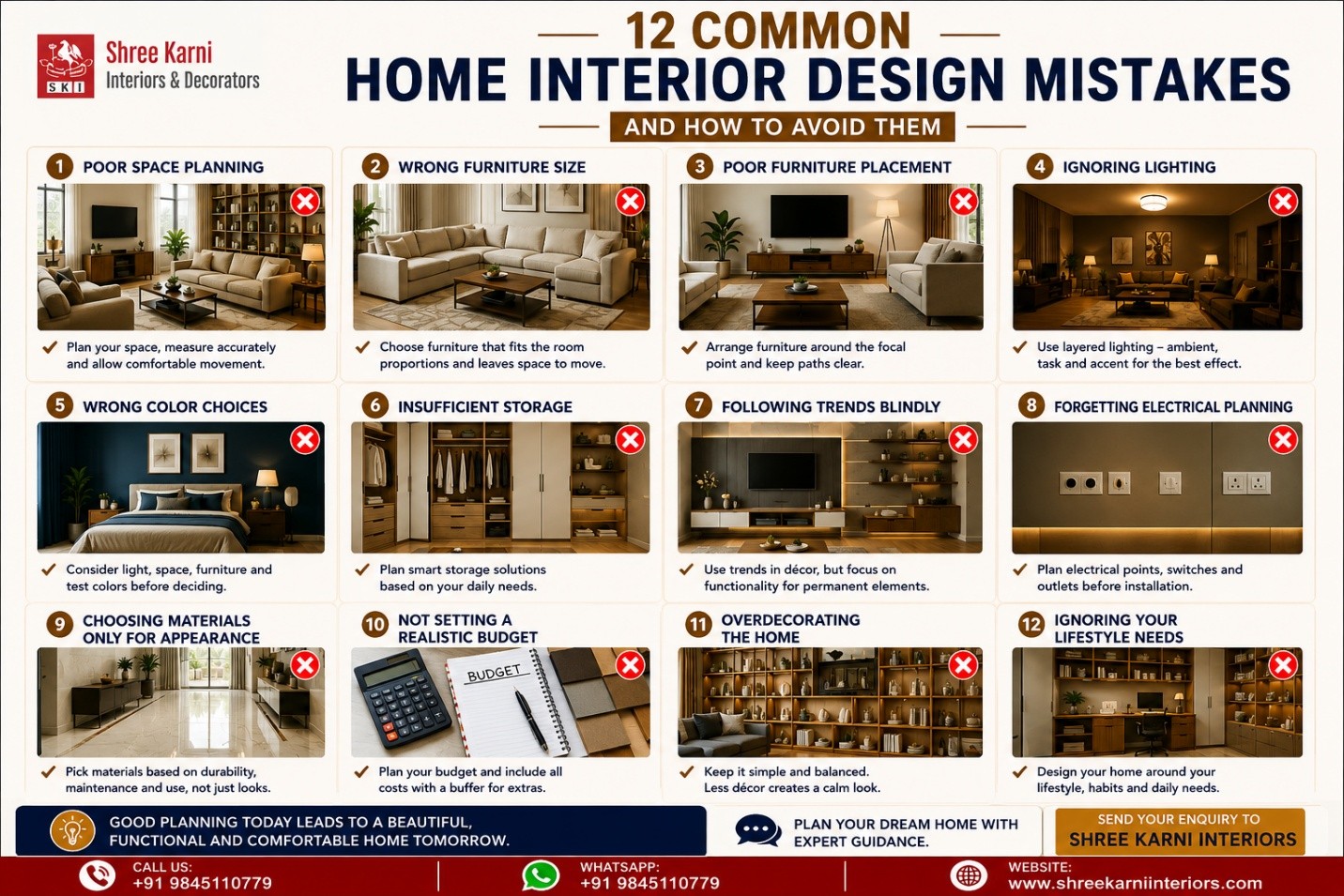
Designing a home interior involves much more than choosing attractive furniture, colors, and decor. A well-designed interior should be comfortable, functional, organized, and suited to the way you and your family live.
However, poor planning can lead to problems that may be expensive or difficult to change later. Incorrect furniture sizes, insufficient storage, poor lighting, unsuitable materials, and an unrealistic budget are some of the issues homeowners may face during an interior project.
Understanding home interior design mistakes and knowing the interior design mistakes to avoid before starting your project can help you make better decisions and reduce unnecessary changes during execution.
In this guide, we cover 12 common interior design mistakes and practical ways to avoid them so you can create a home that is comfortable, functional, and visually appealing.
Planning your home interior? Get expert guidance on space planning, furniture, storage, and lighting.
Send your enquiry to Shree Karni Interiors.
Why Is It Important to Avoid Home Interior Design Mistakes?
Interior design involves several decisions, including space planning, furniture selection, lighting, storage, electrical requirements, materials, and budgeting. A mistake in one area can affect the functionality of the entire space.
Careful planning can help you:
- Make better use of available space
- Improve movement around the home
- Choose appropriately sized furniture
- Create effective lighting
- Provide sufficient storage
- Select suitable materials
- Manage your budget more effectively
- Reduce unnecessary changes during installation
- Create a comfortable environment for your family
A good interior should reflect your lifestyle and daily requirements rather than simply copy a trend or showroom design.
1. Poor Space Planning
One of the most common home interior mistakes is starting the design without properly understanding how the available space will be used.
Space planning mistakes can result in overcrowded rooms, blocked pathways, awkward furniture arrangements, and unused corners. Even a large room can feel uncomfortable if the layout does not support everyday activities.
How to Plan Your Space Properly
Before purchasing furniture or beginning interior work:
- Measure each room accurately.
- Note doors, windows, columns, and other fixed elements.
- Plan comfortable walking paths.
- Decide the purpose of each area.
- Consider furniture dimensions before finalizing the layout.
- Leave enough space for movement and access.
Good space planning allows furniture, storage, lighting, and other elements to work together without making the room feel crowded.
2. Choosing Furniture That Is Too Large or Too Small
Furniture has a major influence on the appearance and functionality of a room. Choosing pieces without considering the room’s proportions can make the space feel cramped or empty.
For example, a large sectional sofa may overwhelm a compact living room, while undersized furniture may look lost in a spacious area.
How to Choose the Right Furniture Size
Measure the available space before buying furniture. Consider the width, height, depth, and overall proportions of each piece.
Also check:
- Door and staircase access
- Walking space
- Distance between furniture
- Window locations
- TV viewing distance
- Number of people using the room
The right furniture should provide comfort while leaving enough space for movement.
3. Poor Furniture Placement
Even correctly sized furniture can cause problems when positioned incorrectly. Furniture placement mistakes can restrict movement and make a room feel unbalanced.
For example, blocking a doorway, covering a window, or creating a narrow passage can affect both comfort and functionality.
How to Arrange Furniture Effectively
Start by identifying the room’s main purpose and focal point.
A living room focal point might be:
- A television
- A large window
- Artwork
- A feature wall
- An architectural feature
Arrange furniture around the focal point while maintaining comfortable walking paths.
In seating areas, consider conversation as well as viewing direction. Furniture should encourage interaction and make the room easy to use.
4. Ignoring Lighting Requirements
Lighting can significantly change the atmosphere and appearance of an interior. Relying on a single ceiling light can leave some areas dark and make a room feel flat.
Plan lighting according to the function of each space.
Use Different Layers of Lighting
Ambient lighting provides general illumination throughout a room.
Task lighting provides focused light for activities such as reading, cooking, studying, or working.
Accent lighting draws attention to artwork, décor, feature walls, or architectural details.
Whenever possible, combine artificial lighting with natural daylight to create a comfortable and balanced environment.
5. Choosing Colors Without Considering the Space
Color can transform a room, but selecting shades without considering the surrounding environment can produce unexpected results.
A color that looks attractive in one setting may appear different at home because of natural light, artificial lighting, flooring, furniture, and room size.
How to Choose Interior Colors
Before finalizing your color palette, consider:
- Amount of natural light
- Artificial lighting
- Room size
- Ceiling height
- Flooring
- Furniture
- Curtains and fabrics
- Overall design style
Test paint colors in the actual room before making a final decision. Check how they look at different times of the day because lighting conditions can change the appearance of a color.
6. Not Planning Enough Storage
Insufficient storage is a common problem in residential interiors. Without suitable storage, everyday belongings can quickly create clutter.
Storage should be planned according to your family’s needs instead of being added after the main design has already been completed.
Smart Storage Solutions
Depending on the available space, consider:
- Built-in wardrobes
- Modular kitchen cabinets
- Under-bed storage
- Tall storage units
- TV units
- Wall-mounted shelves
- Multi-functional furniture
The best storage solutions should be easy to access and organized according to how frequently different items are used.
7. Following Trends Without Considering Functionality
Interior trends can provide inspiration, but following them without considering your lifestyle can lead to poor long-term decisions.
A design may look impressive in photographs but may not be comfortable or practical for your family.
How to Use Trends Wisely
Use your lifestyle and functional requirements as the foundation of your design.
Trends can be introduced through easily replaceable elements such as:
- Cushions
- Rugs
- Curtains
- Artwork
- Decorative accessories
For permanent features such as flooring, wardrobes, kitchen cabinets, and countertops, prioritize durability, functionality, maintenance, and long-term appeal.
8. Forgetting Electrical Planning
Electrical requirements are sometimes considered only after furniture and interior layouts have been finalized. This can result in inconvenient switch positions, insufficient sockets, visible cables, or additional work.
What Should You Plan in Advance?
Consider the location of:
- Power outlets
- Switchboards
- Television connections
- Internet points
- Kitchen appliance connections
- Refrigerator connections
- Washing machine connections
- Workstation outlets
- Charging points
- Decorative lighting
Plan for both your current requirements and possible future needs. Proper electrical planning can make the home more convenient and reduce the need for modifications later.
9. Choosing Materials Only for Appearance
A material can look attractive while being unsuitable for the way a particular space is used.
Kitchens and bathrooms, for example, may require materials that can handle moisture and regular cleaning. High-traffic areas may require surfaces that are easy to maintain and durable enough for frequent use.
What to Consider When Selecting Materials
Compare materials based on:
- Durability
- Maintenance
- Cleaning requirements
- Moisture resistance
- Frequency of use
- Safety
- Budget
- Appearance
A good material choice balances visual appeal with practical performance.
10. Not Setting a Realistic Interior Budget
Budget planning is an important part of any interior project. Without a clear plan, homeowners may spend too much on decorative features and later struggle to complete essential work.
What Should Your Budget Include?
Depending on your project, consider costs for:
- Civil or preparation work
- Flooring
- Modular kitchen
- Electrical work
- Lighting
- Wardrobes
- Storage
- Furniture
- Decor
- Installation
- Labour
- Contingency expenses
Prioritize essential requirements first and allocate the remaining budget to decorative features.
A realistic budget can also help you compare materials and design options before making major commitments.
11. Overdecorating the Home
Adding too many decorative items can make a room feel crowded and visually confusing.
A well-designed interior does not require every wall, shelf, or corner to be filled.
How to Create Visual Balance
Choose a few decorative elements that complement the overall design.
Leave some open space around important features. This can make the room feel cleaner and allow selected furniture, artwork, or architectural elements to stand out.
The goal should be to create a balanced interior rather than fill every available space.
12. Designing Without Considering Your Lifestyle
One of the most common Interior Design Mistakes is designing a home based entirely on photographs, trends, or showroom displays.
Every family has different habits and requirements. A person who works from home may need a dedicated workspace, while a family that cooks frequently may need additional kitchen storage and countertop space.
Questions to Consider Before Designing
Ask yourself:
- How many people live in the home?
- How much storage do we need?
- Does anyone work from home?
- How frequently do we cook?
- Do we have children?
- Do we have pets?
- Do we regularly entertain guests?
- Do we need a study or home office?
- How much maintenance are we comfortable with?
The answers should influence your layout, furniture, storage, materials, and lighting choices.
How to Avoid Interior Design Mistakes
Avoiding Common Interior Design Mistakes and understanding the interior design mistakes to avoid starts with a structured planning process. Working through the project step by step can help reduce errors, delays, and unnecessary expenses.
Step 1: Measure the Space
Take accurate measurements of rooms, doors, windows, ceiling height, and permanent fixtures before finalizing the design.
Step 2: Define Your Requirements
Make a list of functional requirements for each room before selecting furniture, storage, lighting, and finishes.
Step 3: Set a Realistic Budget
Determine your overall budget and divide it according to your priorities. Keep some room for unexpected expenses.
Step 4: Plan the Layout
Decide furniture placement, storage, electrical points, lighting, and movement paths before installation begins.
Step 5: Select Materials Carefully
Compare materials based on durability, maintenance, functionality, appearance, and cost rather than appearance alone.
Step 6: Prioritize Functionality
Make sure the design is comfortable and practical for everyday use instead of focusing only on appearance.
Step 7: Review Everything Before Execution
Check measurements, furniture dimensions, colors, materials, electrical points, lighting, and storage plans before work begins.
Need help planning your home interior? Discuss your requirements with Shree Karni Interiors.
Home Interior Design Mistakes Checklist
Before starting your interior project, review this simple checklist:
- Measure every room accurately.
- Check furniture dimensions before purchasing.
- Plan comfortable walking paths.
- Identify storage requirements.
- Plan natural and artificial lighting.
- Decide electrical points in advance.
- Test paint colors in the actual room.
- Select materials according to their intended use.
- Prepare a realistic budget.
- Consider your family’s lifestyle.
- Review the complete design before execution.
This checklist can help identify potential problems before they become difficult or expensive to change.
When Should You Consult an Interior Design Professional?
Not every project requires the same level of professional support. However, expert guidance can be particularly useful when dealing with space limitations, complex layouts, custom storage, or a complete home renovation.
A professional can help evaluate the space, understand your requirements, prepare a practical layout, select suitable materials, and coordinate different elements of the project.
Projects That May Benefit from Professional Guidance
Professional assistance can be especially useful for:
- Complete home interiors
- New-home projects
- Compact apartments
- Modular kitchens
- Wardrobe planning
- Custom storage
- Large residential projects
The objective should be to create an interior that reflects your lifestyle while making efficient use of the available space.
Final Thoughts
Avoiding home interior design mistakes is not about limiting creativity. It is about making thoughtful decisions that balance appearance, comfort, functionality, durability, and budget.
Careful planning can help you make better use of your space, choose suitable furniture, provide sufficient storage, create effective lighting, and design an interior that fits your family’s daily routine.
The best home interior is not simply the one that looks impressive in photographs. It is the one that feels comfortable, functions efficiently, and continues to meet your needs over time.
Planning Your Home Interior?
If you are planning a new home interior or renovating an existing space, professional guidance can help you make better use of your available space and avoid unnecessary planning errors.
Explore Shree Karni Interiors’ home interior design services to discuss your space, lifestyle, functional requirements, and design goals.
Ready to plan your home interior? Send your enquiry to Shree Karni Interiors.
Create your interior around your space, lifestyle, and budget to achieve a home that is both beautiful and practical.