
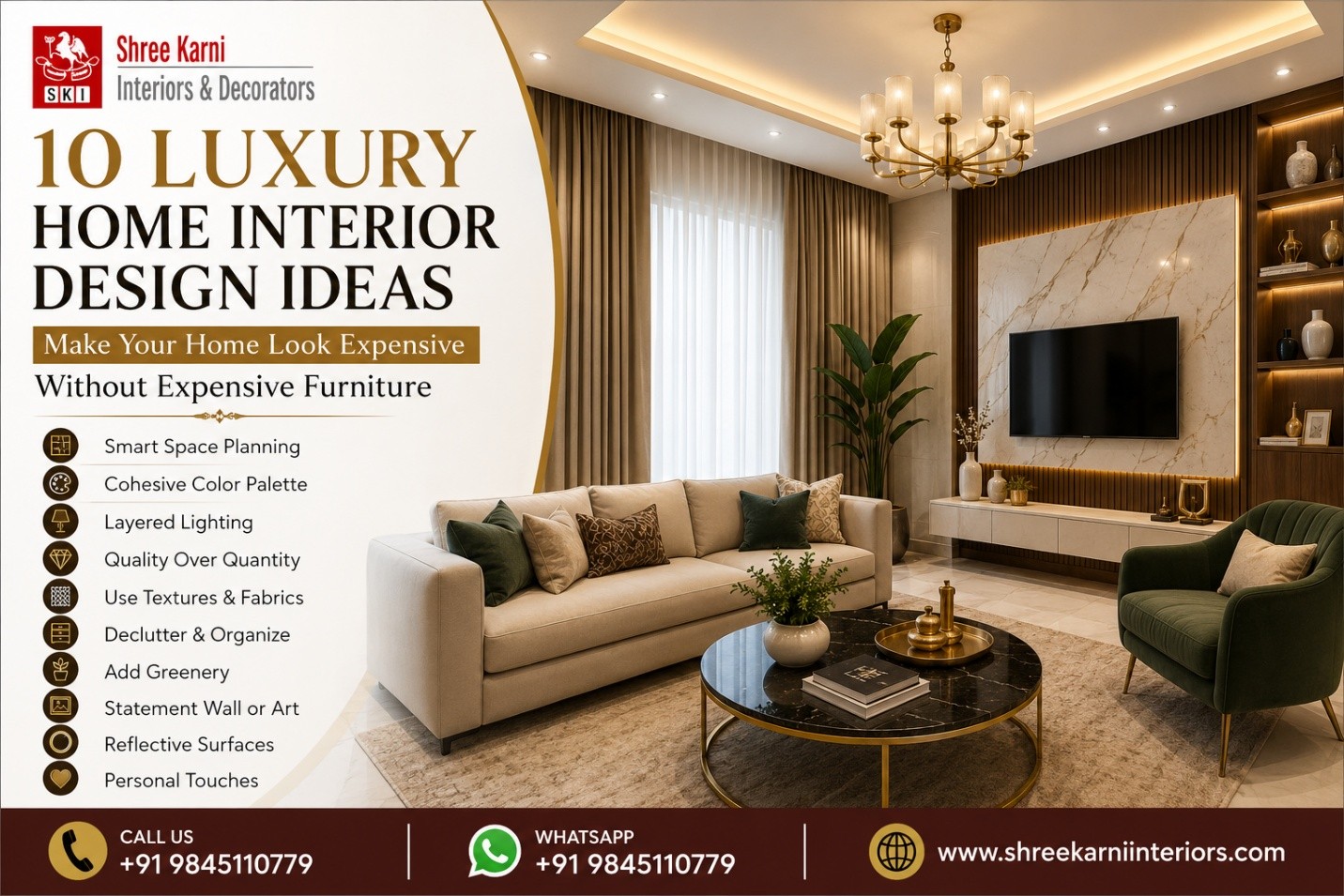
A luxurious-looking home is not necessarily filled with expensive furniture or designer products. In many well-designed homes, the sense of luxury comes from thoughtful space planning, balanced proportions, suitable lighting, coordinated colors, organised storage, and carefully selected materials.
You can create a sophisticated interior without replacing every piece of furniture. Small but intentional changes to the layout, lighting, finishes, textiles, and décor can make a noticeable difference to the overall appearance of a room.
The key is to make every element work together. A simple sofa can look elegant when it is placed correctly, surrounded by coordinated colors, supported by good lighting, and paired with a few carefully selected accessories.
Whether you are furnishing a new property or updating your existing home, these Luxury Home Interior Design Ideas can help you create a refined, comfortable, and cohesive space without unnecessary spending. For professional guidance, explore Shree Karni Interiors
Here are 10 practical interior design secrets that can give your home a more sophisticated appearance.
Plan Your Home Interior with Shree Karni Interiors
1. Start with Smart Space Planning
Space planning is one of the most important parts of interior design. A room can contain attractive furniture and high-quality finishes but still feel uncomfortable if everything is positioned poorly.
Before purchasing anything, understand how the room will be used. Consider furniture dimensions, walking paths, doors, windows, natural light, and the activities that take place in the space.
Create Comfortable Movement Paths
Leave sufficient space between furniture so people can move around easily. Avoid placing sofas, tables, cabinets, or other large pieces where they obstruct doors, windows, walkways, or frequently used areas.
An uncluttered layout can make a room feel larger and more comfortable without requiring additional furniture.
Select Furniture According to Room Size
Furniture should be proportional to the room.
A large sectional sofa may overwhelm a compact living room, while very small furniture may make a spacious room feel incomplete. Measure the available space before purchasing major pieces and consider how each item will interact with the others.
Good Home Interior Design Ideas should balance aesthetics, comfort, proportion, and everyday functionality.
2. Create a Cohesive Color Palette
Color has a strong influence on the character of a home. A carefully planned palette can make different elements appear connected and create a more polished interior.
Instead of using many unrelated colors, choose a base color and add a small number of complementary shades.
Choose a Neutral Foundation
Neutral shades can provide a versatile foundation for living rooms, bedrooms, dining areas, and other spaces.
Consider colors such as:
- Warm white
- Cream
- Beige
- Taupe
- Soft grey
- Light brown
These shades can create a calm background while allowing furniture, artwork, plants, and accessories to stand out.
Introduce Accent Colors Carefully
Add one or two complementary accent colors through cushions, rugs, curtains, artwork, chairs, or decorative objects.
For example, a neutral room can gain depth through muted green, deep blue, terracotta, charcoal, or other carefully selected accent shades.
The goal is not to make every element identical. Instead, repeat selected colors throughout the room so the overall design feels connected.
A coordinated palette is one of the simplest Luxury Interior Design Ideas because it can improve the appearance of a space without requiring expensive furniture.
3. Use Layered Lighting to Create a Refined Atmosphere
Lighting can dramatically change the way a room looks. Even attractive furniture can appear ordinary when a space depends entirely on a single harsh ceiling light.
A layered lighting plan provides flexibility and creates greater depth.
Combine Different Types of Lighting
A balanced lighting scheme can include three main layers:
- Ambient lighting: Provides general illumination throughout the room.
- Task lighting: Provides focused light for activities such as reading, cooking, studying, or working.
- Accent lighting: Draws attention to artwork, shelves, textures, architectural details, or other features.
Depending on the room, you can combine ceiling lights, pendant fixtures, wall lights, floor lamps, table lamps, and concealed lighting.
Select Lighting for the Room’s Purpose
Warm lighting can create a comfortable atmosphere in living rooms and bedrooms, while brighter task lighting may be more suitable for kitchens, study areas, and workspaces.
The fixture itself also matters. A simple but well-proportioned pendant or wall light can become a decorative feature while providing useful illumination.
Good lighting can enhance wall colors, fabrics, textures, and finishes, making the entire interior feel more considered.
4. Replace Clutter with Smart Storage
A well-organised home often looks more sophisticated than a home filled with unnecessary objects.
Clutter makes surfaces look busy and can reduce the visual impact of furniture and décor. Effective storage helps maintain a cleaner and more structured environment.
Give Everyday Items a Dedicated Place
Depending on the room, useful storage solutions may include:
- Built-in cabinets
- Closed storage units
- Storage benches
- Wall-mounted shelves
- Multipurpose furniture
- Drawer organisers
- Internal cabinet organisers
- Tall storage units
Frequently used belongings should remain easy to access, while items that are rarely needed can be stored away.
Keep Visible Surfaces Uncluttered
Avoid filling every shelf, tabletop, and countertop with decorative objects.
Instead, select a small number of items that are useful, attractive, or meaningful. Leaving some open space allows important pieces to stand out.
This is particularly valuable for Affordable Home Interior Design, because better organisation can create a noticeable improvement without major structural changes or expensive purchases.
5. Design the Modular Kitchen Around Your Lifestyle
The kitchen is one of the most frequently used spaces in a home, so its design needs to combine appearance with practicality.
A sophisticated kitchen does not necessarily depend on the most expensive materials. A well-planned layout, efficient storage, coordinated finishes, suitable lighting, and functional hardware can have a greater impact on the overall result.
Plan Storage Around Your Daily Needs
Consider storage solutions such as:
- Tall units
- Pull-out drawers
- Corner storage
- Appliance units
- Cutlery organisers
- Overhead cabinets
- Pantry storage
- Dedicated storage for frequently used appliances
Think about how you prepare food, store groceries, use appliances, and access everyday kitchen items.
Storage should be designed around your routine rather than simply filling every available cabinet space.
Keep Kitchen Finishes Consistent
Cabinet colors, handles, countertops, backsplashes, lighting, and flooring should complement one another.
A clean countertop combined with coordinated hardware, simple cabinet colors, and effective lighting can create a premium appearance without unnecessary decoration.
The most successful kitchen designs usually feel intentional rather than overloaded with different materials and finishes.
6. Create One Strong Focal Point
A room becomes easier to visually understand when it has a clear focal point. This gives the eye a natural place to settle and helps establish the character of the space.
A focal point does not have to be expensive. Its impact often comes from placement, proportion, color, lighting, or texture.
Choose a Suitable Focal Point
Depending on the room, you could highlight:
- A statement wall
- A large artwork
- A textured wall
- A TV unit
- A decorative mirror
- A distinctive light fixture
- An architectural feature
- A fireplace or display area
Avoid Too Many Statements Features
If every wall and piece of furniture competes for attention, the room can feel visually crowded.
Instead, select one major feature and allow the surrounding elements to support it.
This is one of the most effective Elegant Home Interior Ideas for creating visual impact without spending heavily on furniture.
7. Use Materials and Finishes with Purpose
Materials influence both the appearance and atmosphere of a home. The objective is not to use the most expensive material available but to select finishes that work well together.
A limited number of complementary materials can create a more sophisticated result than a room filled with unrelated finishes.
Combine Different Textures
You can create visual depth by combining materials such as:
- Wood
- Glass
- Metal
- Stone
- Fabric
- Textured wall finishes
- Natural-looking surfaces
For example, a simple wooden cabinet can look more refined when paired with suitable lighting, coordinated handles, complementary wall colors, and carefully selected accessories.
Maintain Material Consistency
Avoid introducing too many unrelated finishes into the same space.
If a room already contains several textures, keep the remaining elements relatively simple. Repeating selected materials or finishes in different areas can also create continuity.
Luxury often comes from restraint. A smaller number of well-coordinated materials can produce a more cohesive result than excessive variety.
8. Give the Ceiling a Purpose
The ceiling is often overlooked during interior planning, even though it can influence the proportions, lighting, and overall character of a room.
A ceiling does not need elaborate detailing to contribute to a sophisticated interior.
Consider Simple Ceiling Treatments
Depending on the room’s size, height, and design requirements, options may include:
- Cove lighting
- Recessed lighting
- A simple false ceiling
- Minimal ceiling borders
- Wooden accents
- Subtle architectural details
The ceiling should support the rest of the room rather than compete with furniture, walls, lighting, and décor.
Keep the Design Proportionate
Avoid adding complex ceiling treatments simply because the space allows them.
A clean design with appropriately positioned lighting can often create a more refined result than an elaborate ceiling filled with unnecessary details.
9. Add Personality Without Overdecorating
Luxury does not mean making a home look formal or impersonal. A well-designed home should reflect the people who live there.
Artwork, plants, books, textiles, photographs, and decorative objects can add character when they are selected thoughtfully.
Choose Meaningful Decor
Consider adding:
- Artwork
- Indoor plants
- Decorative mirrors
- Books
- Cushions
- Rugs
- Sculptural objects
- Personal photographs
Choose pieces that complement the room’s colors, materials, and overall style.
You do not need a large collection of accessories. A few carefully selected pieces can have more impact than numerous unrelated objects.
Use Negative Space
Not every wall, shelf, or tabletop needs decoration.
Leaving some areas empty gives the room visual breathing space and allows important furniture, artwork, lighting, and architectural features to stand out.
This simple principle can help you achieve a sophisticated look without continuously buying new décor.
10. Balance Beauty, Functionality, and Budget
A successful interior should look attractive while remaining practical for everyday life.
Before spending money on an upgrade, consider what it will actually improve. The best investments usually address appearance, comfort, functionality, storage, or usability.
Prioritise High-Impact Improvements
If your budget is limited, consider prioritising:
- Space planning
- Lighting
- Storage
- Wall finishes
- Curtains and rugs
- Hardware
- Artwork and accessories
You do not need to renovate the entire home at once.
A phased approach allows you to improve the most important areas first and gradually make additional changes as your budget allows.
Spend Where It Matters
Instead of purchasing several inexpensive decorative items, consider investing in a few improvements that will be used frequently or remain visible for years.
For example, better storage, suitable lighting, functional kitchen planning, or quality curtains may provide greater long-term value than buying numerous decorative pieces.
How to Apply These Interior Design Principles to Every Room
The same design principles can be adapted to different areas of your home. The priorities may change depending on how each room is used.
Living Room
Focus on furniture placement, comfortable movement, layered lighting, coordinated colors, and one clear focal point.
Keep coffee tables, shelves, and other visible surfaces relatively uncluttered. A small number of carefully selected accessories can provide enough personality without overwhelming the room.
Bedroom
A bedroom should feel calm, comfortable, and organised.
Use soft colors, suitable lighting, coordinated bedding, practical storage, and complementary curtains or rugs. Matching selected elements, such as bedside lighting and textiles, can create a more cohesive appearance.
Dining Area
Keep the dining area visually connected to nearby spaces.
A pendant light above the dining table can define the area, while artwork, a mirror, or simple table décor can add character.
Avoid filling the dining table with unnecessary decorative objects, especially if the table is used regularly.
Bathroom
A bathroom can feel more refined through clean lines, coordinated finishes, good lighting, and organised storage.
Mirrors, cabinet hardware, lighting fixtures, tiles, and accessories may be relatively small details, but together they can influence the overall appearance.
Modern Home Interior Design for Bangalore Homes
Bangalore homes often need to balance contemporary aesthetics with practical everyday requirements. Available space, natural light, ventilation, storage, maintenance, and lifestyle needs can all influence interior decisions.
Make the Most of Compact Homes
Apartments and compact homes benefit from appropriately scaled furniture and efficient storage.
Avoid overcrowding the room with oversized pieces. Multifunctional furniture, vertical storage, and built-in solutions can help make better use of limited floor space.
Make Better Use of Natural Light
Natural light can make interiors feel brighter and more spacious.
Keep windows relatively clear and select curtains that provide privacy without unnecessarily blocking daylight.
Where possible, use lighter wall colors and reflective surfaces to help distribute available natural light.
Maintain a Consistent Design Language
For larger homes, create visual continuity between connected rooms.
You can repeat selected colors, materials, hardware finishes, wood tones, or textures without making every room identical.
This approach can help create Modern Home Interior Design that feels contemporary, practical, and cohesive.
Discuss Your Bangalore Home Interior Project
How to Create a Luxury Look on a Limited Budget
You do not need to renovate the entire home to achieve a more polished appearance.
Start with changes that provide the greatest visible improvement and gradually move towards larger upgrades.
Step 1: Declutter and Organise
Remove unnecessary belongings and organise items according to how often you use them.
Keep countertops, tables, shelves, and other prominent surfaces clean.
Step 2: Improve the Layout
Rearrange furniture to improve movement, balance, and usability.
Sometimes moving an existing sofa, table, bed, or cabinet can make a room feel noticeably better without spending anything.
Step 3: Coordinate the Colors
Choose a simple base palette and introduce a limited number of complementary accent colors.
This creates visual consistency and prevents the space from feeling chaotic.
Step 4: Improve the Lighting
Add task or accent lighting where necessary rather than relying entirely on one ceiling fixture.
Use lighting to highlight useful areas and selected design features.
Step 5: Upgrade Soft Furnishings
Curtains, rugs, cushions, bedding, and other textiles can introduce color and texture while making a room feel more finished.
Step 6: Add Selected Decor
Choose artwork, mirrors, plants, and accessories that complement the overall design.
Avoid buying décor simply to fill empty spaces.
Step 7: Upgrade High-Use Areas
Once the basics are addressed, focus on areas that would benefit most from improvement, such as the kitchen, wardrobes, storage, study area, or TV unit.
Why Customised Home Interiors Can Create a More Cohesive Look
Ready-made furniture can be practical and convenient, but customised interiors can make it easier to use available space efficiently and maintain consistency throughout the home.
Storage can be planned around your belongings, furniture can be designed according to room dimensions, and materials can be selected to complement other areas of the property.
Plan Around Your Lifestyle
A home should be designed around the people who use it.
Consider your daily routines, storage requirements, work habits, entertaining needs, family requirements, and preferred style before making major interior decisions.
This can help ensure that design choices are both attractive and functional.
Focus on Practical Customisation
Customisation does not automatically mean choosing the most expensive option.
The real value comes from thoughtful planning, suitable materials, efficient storage, appropriate proportions, and effective use of available space.
When these elements are planned together, even relatively simple furniture and finishes can contribute to a polished interior.
Get Started with Your Home Interior Project
Final Thoughts
A luxurious-looking home is not necessarily the one with the most expensive furniture. In many cases, the difference comes from thoughtful planning and the way individual elements work together.
Well-proportioned furniture, organised storage, coordinated colors, layered lighting, suitable materials, comfortable textiles, and restrained décor can make an ordinary space feel considerably more polished.
The objective should not simply be to make your home look expensive. A well-designed home should also feel comfortable, functional, personal, and easy to maintain.
If you are planning a home interior in Bangalore, professional interior planning can help you make better use of your available space, storage, lighting, materials, and budget. Shree Karni Interiors can help you develop a practical interior design approach based on your home’s layout, lifestyle, functional requirements, and preferred aesthetic.