
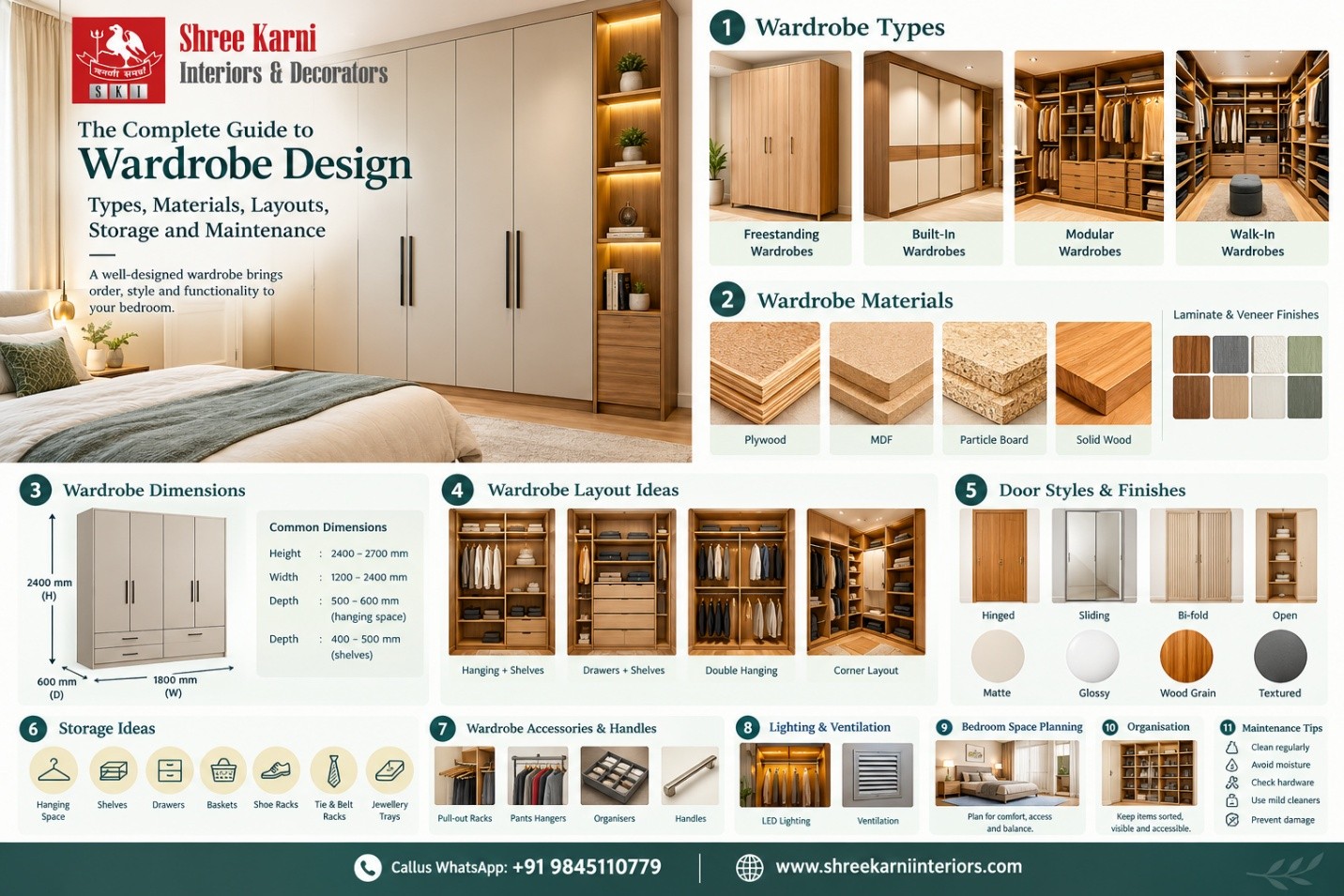
A well-planned wardrobe keeps clothing organised, simplifies daily routines and complements your bedroom interiors. Choosing the right wardrobe involves more than selecting an attractive color or finish. Materials, dimensions, door styles, handles, internal storage and maintenance requirements all influence its everyday usability.
For homeowners exploring wardrobe design in Bangalore, selecting a suitable wardrobe starts with understanding the available space, household needs, lifestyle and personal preferences. You can also explore modular wardrobe designs in Marathahalli when considering wardrobe options for your bedroom. A compact bedroom may require a space-saving arrangement, while a larger room may accommodate additional storage or a dedicated dressing area.
This complete wardrobe design guide from Shree Karni Interiors and Decorators explains the essential considerations, including wardrobe types, construction materials, dimensions, layouts, finishes, storage ideas, accessories, handles, lighting, ventilation, bedroom space planning, organisation and maintenance.
Planning a new wardrobe for your home? Contact Shree Karni Interiors and Decorators to discuss your requirements.
1. Understanding Different Wardrobe Types
Wardrobes differ in their construction, installation and storage capacity. Understanding the main types helps you choose an option that suits your bedroom and storage requirements.
Freestanding Wardrobes
Freestanding wardrobes are independent furniture units that can be moved when necessary. They are suitable for rented properties, guest bedrooms and homes where permanent installation is not preferred.
Their main advantage is flexibility. However, standard units may leave gaps between the cabinet and surrounding walls, depending on the available space and furniture dimensions.
Built-In Wardrobes
Built-in wardrobes are fitted into a designated area and can be designed around wall recesses or architectural features. They offer a coordinated appearance and can make use of spaces that may not suit standard furniture.
Since these wardrobes are designed for a specific location, accurate measurements and careful installation planning are essential.
Modular Wardrobes
Modular wardrobes consist of individual components, such as cabinet sections, shelves, drawers and hanging units. These components are assembled according to the required storage arrangement.
Depending on the system, some modules may be replaced or rearranged later. Check the manufacturer’s specifications before assuming that components can be easily reconfigured.
Walk-In Wardrobes
A walk-in wardrobe is a dedicated dressing and storage area for clothing, footwear and accessories. It may include storage along one or more walls, with sufficient room to access the contents comfortably.
This arrangement is generally more suitable for larger bedrooms or separate dressing areas where enough space is available for storage and movement.
2. Choosing Suitable Wardrobe Materials
Wardrobe materials influence structural performance, appearance, maintenance and resistance to moisture. Compare the available options before finalising the construction.
Plywood
Plywood is an engineered wood product made by bonding thin layers of wood veneer together. It is commonly used for wardrobe carcasses, shelves and shutters.
Its performance depends on the grade, thickness, bonding quality and installation. Moisture-resistant grades may suit certain conditions, but exposed edges and joints still require appropriate protection.
Medium-Density Fibreboard (MDF)
MDF is an engineered wood product with a smooth, uniform surface. It is often used for painted wardrobe panels and decorative components.
Standard MDF can swell when exposed to moisture. Moisture-resistant variants offer improved performance under specified conditions, but they should not be considered waterproof.
Particle Board
Particle board is made by compressing wood particles with a binding agent. It is used in various types of modular furniture and can be suitable for wardrobes when the material grade, hardware and installation meet the intended requirements.
Review the manufacturer’s specifications for load capacity, moisture resistance and fixing requirements before choosing this material.
Solid Wood
Solid wood offers natural grain patterns and a distinctive appearance. It can be used for wardrobe frames, shutters and decorative details.
Changes in humidity may cause wood to expand or contract. Proper seasoning, suitable finishing and appropriate installation help manage these changes.
Laminates and Veneers
Laminates and veneers are surface finishes rather than structural materials.
- Laminates: Manufactured surfaces available in different colors, patterns and textures. They are generally easy to clean when maintained according to the manufacturer’s instructions.
- Veneers: Thin layers of natural wood applied to a supporting surface. They provide a natural wood appearance and may require more careful maintenance.
Always assess the core material and surface finish separately. This helps you understand the wardrobe’s construction, appearance and care requirements.
3. Understanding Wardrobe Dimensions
Accurate wardrobe dimensions help ensure that the cabinet accommodates your belongings and that doors, drawers and internal fittings operate properly.
Wardrobe Depth
A depth of approximately 550–600 mm is a common starting point for conventional hanging storage. The final measurement should account for the shutter, hanging rail and clearance required by clothing.
Shallower cabinets may suit folded garments and shelving, but they may not provide sufficient room for every type of hanging garment. Check the usable internal depth before finalising the design.
Wardrobe Height
The required height depends on the ceiling, storage needs and proposed design. Taller units can provide additional space for luggage, spare bedding and other items used occasionally.
Before choosing a floor-to-ceiling wardrobe, confirm the available height and plan how upper compartments will be accessed safely.
Wardrobe Width
The available wall width determines how much space can be allocated to hanging sections, shelves and drawers. Measure the installation area and note any irregularities in the walls.
Divide the interior according to the number of users and their clothing requirements. Confirm all measurements with the designer or installer before fabrication, as dimensions should be adjusted to the room rather than treated as universal standards.
4. Exploring Practical Wardrobe Layout Ideas
A wardrobe layout describes how storage sections are arranged within the available area. The best configuration depends on the room’s shape, wall space and movement requirements.
Single-Wall Layout
A single-wall layout places the wardrobe along one wall. It suits many bedrooms and keeps storage in one location.
The interior can be divided into hanging sections, shelves and drawers according to the household’s needs. This arrangement can also help preserve open floor space.
L-Shaped Layout
An L-shaped arrangement uses two adjoining walls, extending storage around a corner. It can make use of a corner that might otherwise remain underutilised.
Plan the corner section carefully so that stored belongings remain accessible and adjoining doors or drawers do not obstruct one another.
U-Shaped Layout
A U-shaped layout uses three sides of a designated area. It provides storage across multiple walls and is generally more suitable for larger bedrooms or separate dressing rooms.
Allow enough space between storage sections for comfortable movement, opening drawers and accessing belongings.
Wardrobe with Loft Storage
Loft cabinets are positioned above the main wardrobe and provide additional space for suitcases, spare bedding and other infrequently used belongings.
Ensure that the units are securely installed and that their contents can be retrieved safely. Store frequently used items at an accessible height.
5. Selecting the Right Wardrobe Door Styles
Door mechanisms influence accessibility, appearance and the clearance required in front of a wardrobe. Choose a style that works with your room dimensions and daily routine.
Hinged Doors
Hinged doors swing outward and provide access to a large portion of the interior at once. They are suitable when sufficient opening space is available.
Select appropriate hinges and ensure that the doors are aligned correctly during installation. Check that open doors do not obstruct beds, bedside tables or walkways.
Sliding Doors
Sliding doors move along tracks instead of swinging outward. They can be useful in compact bedrooms where outward-opening panels would restrict movement.
However, sliding panels generally expose only part of the wardrobe opening at a time. Consider this limitation when planning access to different compartments.
Folding Doors
Folding doors use connected panels that fold as the wardrobe opens. They offer another way to access wider sections of a cabinet.
Check the hardware quality, panel arrangement and required clearance before selecting this mechanism.
Open Wardrobes
Open wardrobes use exposed shelves and hanging rails without conventional shutters. They keep belongings visible and easy to reach.
Clothing and accessories are more exposed to dust, so this design is best suited to households that can maintain regular cleaning and organisation.
6. Choosing Wardrobe Finishes and Colors
The finish determines the wardrobe’s visible surface and influences how it coordinates with the rest of the bedroom. Consider the material, lighting and surrounding décor before making your selection.
Matte Finishes
Matte surfaces create a subtle appearance and complement many interior styles. Depending on the texture and color, some matte finishes may show marks or fingerprints more readily than others.
Glossy Finishes
Glossy surfaces reflect light and can create a better visual effect. They may suit contemporary interiors, although smudges and fingerprints can be more noticeable on some materials.
Woodgrain Finishes
Woodgrain laminates and veneers introduce natural-looking patterns and visual warmth. They can complement wooden furniture, neutral walls and other furnishings with similar tones.
Selecting Wardrobe Colors
Light shades can make a room feel visually open, while darker tones create contrast. Consider the wall color, flooring, natural light and existing furniture before deciding.
Using one main color with a complementary accent can create a balanced appearance without introducing too many competing patterns.
7. Planning Effective Wardrobe Storage Ideas
Internal storage should reflect the belongings you own and how you use them. Plan each compartment according to the type and quantity of items it needs to hold.
Hanging Sections
Hanging rails are suitable for shirts, dresses, jackets and other garments that wrinkle easily. Separate shorter and longer clothing where practical to make better use of the space below the rail.
Consider whether you need a single hanging section or separate levels for different types of clothing.
Adjustable Shelves
Shelves accommodate folded clothing, towels, bags and other belongings. Adjustable options make it easier to change the arrangement when requirements evolve.
Choose shelf spacing according to the items you intend to store and avoid creating compartments that are unnecessarily tall or difficult to reach.
Drawers for Smaller Items
Drawers are useful for socks, undergarments, folded clothing and smaller belongings. Shallow drawers can separate small items, while deeper ones can accommodate bulkier garments.
Consider the size of the items and how frequently they will be accessed when deciding the number and position of drawers.
Seasonal Storage
Reserve suitable compartments for seasonal clothing, occasion wear and spare bedding that is not needed regularly.
Before placing garments into long-term storage, clean them as appropriate and ensure they are completely dry. Use suitable storage covers where needed.
Looking for a wardrobe that suits your space and storage needs? Contact Shree Karni Interiors to discuss your requirements.
8. Wardrobe Accessories and Handles That Improve Functionality
Wardrobe accessories and handles affect how easily you can organise and access your belongings. Select fittings according to your storage needs, preferred appearance and available space.
Useful Wardrobe Accessories
- Pull-out organisers: Make selected items easier to access inside deeper compartments.
- Trouser and tie racks: Keep garments and accessories arranged separately.
- Shoe racks: Provide a dedicated place for footwear.
- Jewellery trays: Separate small accessories and help prevent tangling.
- Drawer dividers: Create individual sections for different belongings.
- Mirrors: Add a convenient dressing feature when fitted to a suitable shutter or cabinet section.
Before selecting accessories, confirm their dimensions, mounting requirements and load capacity. Check whether each fitting is included in the quotation and whether it reduces usable storage space.
Choosing Wardrobe Handles
Handles should be comfortable to use and compatible with the wardrobe’s door style.
- Knob handles: Provide a simple option for many hinged wardrobe doors.
- Bar handles: Offer a practical grip and suit a range of contemporary and traditional designs.
- Recessed handles: Sit within the door surface and can create a streamlined appearance.
- Handleless designs: Use integrated grooves or push-to-open mechanisms, depending on the system.
Check the handle position, grip, finish and compatibility with the shutters. Ensure that handles do not interfere with adjoining doors, drawers or nearby furniture.
9. Considering Wardrobe Lighting and Ventilation
Lighting improves visibility inside deep cabinets and helps you locate clothing. Integrated LED lights can illuminate selected shelves and hanging sections. Door-activated lighting or motion sensors may also be suitable, depending on the system.
Plan electrical connections before installation and use appropriate fittings installed according to the manufacturer’s instructions. Ensure that wiring and fixtures are suitable for the cabinet design.
Ventilation helps maintain a suitable storage environment. Damp garments and moisture entering through walls can contribute to musty smells or mould growth.
Store only dry clothing, avoid overcrowding compartments and maintain suitable ventilation in the bedroom. If dampness persists, identify and address its source instead of relying on fragrance products to mask the smell.
10. Planning a Wardrobe Around Your Bedroom Space
The wardrobe’s position should allow convenient movement around the room and preserve access to other furniture and fixtures.
Measure the available wall and note the locations of doors, windows, switches, electrical outlets and existing furnishings. Check whether the proposed doors and drawers can open without hitting the bed, bedside tables or other objects.
In compact bedrooms, sliding doors may preserve floor clearance. Larger rooms may accommodate a built-in wardrobe or a separate dressing area if sufficient space remains for movement.
Consider access to electrical connections and the effect of the cabinet on natural light. Record these details in the design drawings and confirm them before fabrication.
11. Organising Your Wardrobe Efficiently
A consistent organisation system helps keep belongings easy to find after installation.
Start by grouping clothing into categories such as workwear, everyday wear, occasion wear and seasonal items. Assign each group a regular place based on how often it is used.
Return belongings to their designated sections after use and review the contents periodically. Remove items you no longer need and leave some spare capacity for future purchases or changing requirements.
Keep frequently used items at an accessible height and place less frequently used belongings in suitable upper compartments. This approach makes it easier to maintain order without repeatedly rearranging the entire wardrobe.
12. Essential Wardrobe Maintenance Tips
Regular maintenance helps preserve the surface finish, keeps moving parts functioning properly and allows minor issues to be addressed early.
Clean Surfaces Correctly
Use a soft cloth and cleaning products suitable for the selected finish. Avoid abrasive scrubbers, excessive water and harsh chemicals unless the manufacturer specifically permits them.
Follow the care instructions for laminates, veneers, painted surfaces and other materials. Wipe spills promptly to reduce the risk of staining or moisture damage.
Inspect Hinges, Tracks and Runners
Check hinges, sliding tracks, drawer runners and handles periodically for looseness or misalignment. Remove accumulated dust and follow the hardware manufacturer’s instructions for adjustments or lubrication.
Repair loose fittings promptly to help prevent further wear.
Check for Moisture Damage
Inspect the interior, edges and joints for swelling, mould or other signs of dampness. Address the source of moisture and allow affected areas to dry appropriately.
Seek professional advice if the damage persists or affects the cabinet structure.
Avoid Overloading
Follow the recommended load capacity for shelves, drawers and hanging rails. Excessive weight can cause sagging or damage the fixings.
Distribute heavier belongings appropriately and arrange repairs if a section becomes loose or begins to bend.
13. How to Finalise Your Wardrobe Design
Before approving a wardrobe proposal, check that the design meets your practical requirements and that the agreed specifications are clear.
- Confirm your requirements: Establish who will use the wardrobe and what needs to be stored.
- Review the design: Check the cabinet type, layout, dimensions and door mechanism.
- Verify materials: Confirm the core material, surface finish, hardware and accessories.
- Check the drawings: Review internal compartments, door openings and installation details.
- Clarify the quotation: Confirm what is included, such as delivery, installation, finishing and fittings.
- Review maintenance requirements: Obtain the recommended care instructions for the selected materials and hardware.
For homeowners in Bangalore, reviewing these details before fabrication helps align the final proposal with the available space, household needs and preferred appearance. Careful planning also helps you compare different wardrobe designs according to practical requirements rather than appearance alone.
If you are considering a modular wardrobe for your home, explore our modular wardrobe designs in Marathahalli to learn more about the available options.
Ready to plan your wardrobe design? Enquire with Shree Karni Interiors to get started.
Conclusion
Choosing a wardrobe involves balancing construction quality, storage requirements, appearance and available bedroom space. A suitable combination of materials, dimensions, layout, door style and accessories can make everyday use more convenient while complementing your interiors.
For homeowners considering wardrobe design in Bangalore, reviewing the proposed design, specifications and installation details before fabrication is an important step. With careful planning, you can select a wardrobe that suits your home, supports your daily routine and remains practical to use and maintain.